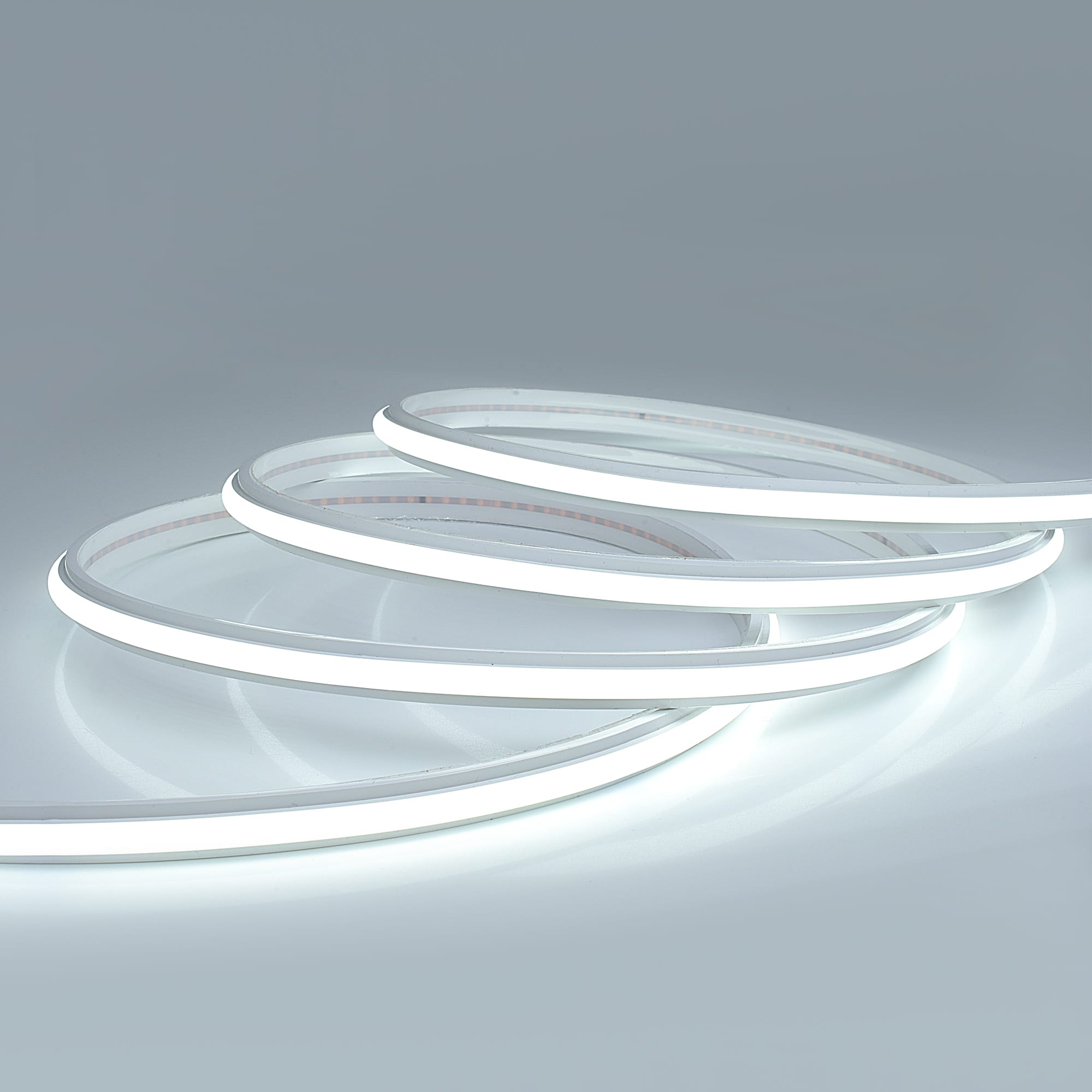
1. What Is a High Voltage COB LED Strip?
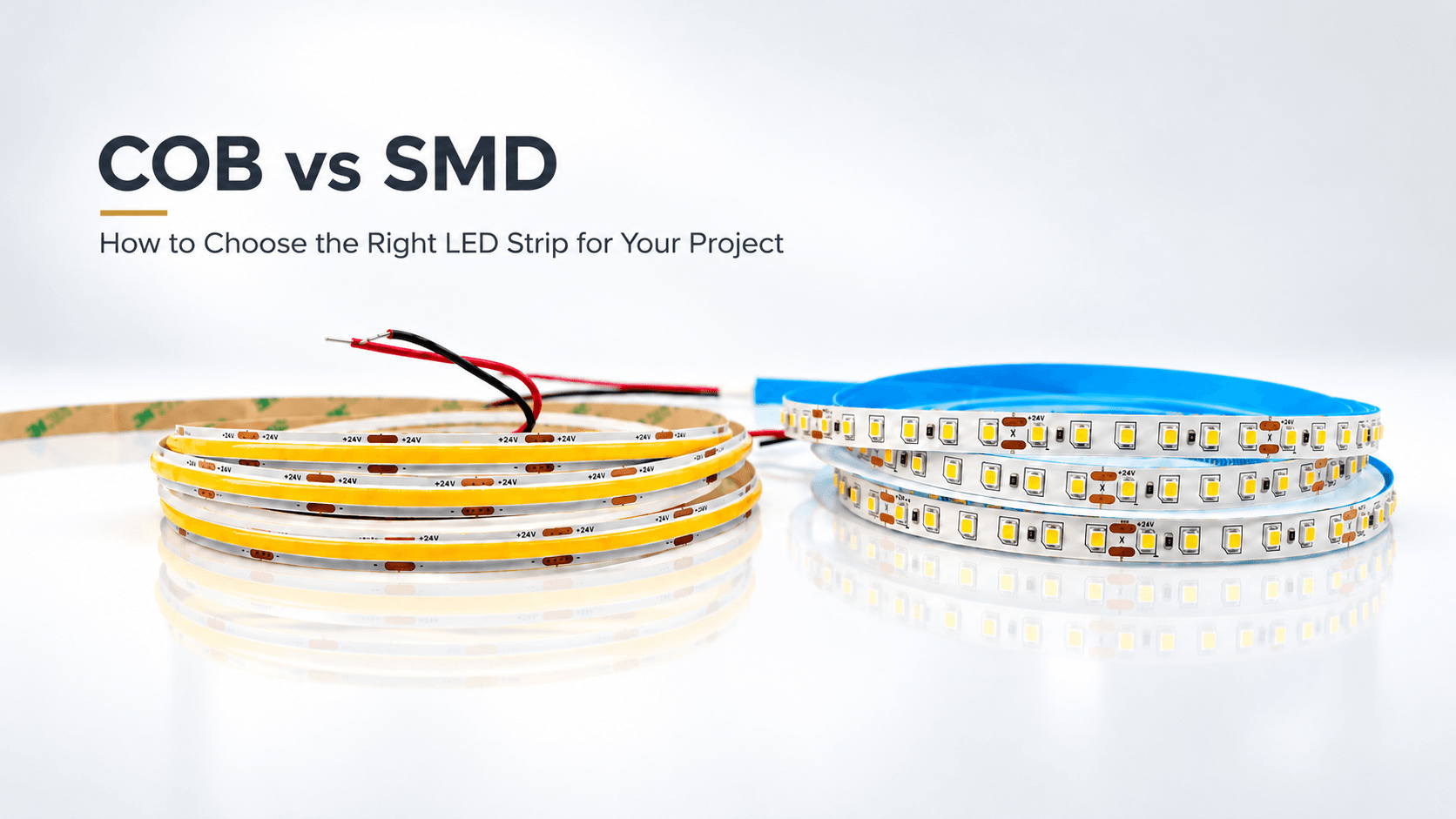
COB stands for Chip on Board. In a typical white COB strip, closely spaced LED chips and a phosphor layer create a continuous-looking emitting surface. This helps reduce the visible points associated with more widely spaced LED packages.
For a closer look at the light source construction, see our COB vs SMD LED strip guide.
In the LED strip market, “high voltage” commonly distinguishes mains-voltage products from 12V or 24V strips. Products may be designed for different regional supplies, such as 110/120V or 220–240V. Always confirm the exact input rating; these are not interchangeable specifications.
Some designs eliminate a separate low-voltage power supply by incorporating electrical functions into the strip or its connection assembly. Descriptions such as “driverless” still require buyers to check the specified connection accessories and installation instructions for the selected model.

2. Why Consider High Voltage COB for Long Linear Lighting?
A Continuous-Looking Light Source
A smooth line can help architectural lighting read as part of the space. COB construction is useful where individual LED points would distract from a ceiling edge, decorative outline or illuminated detail.
The finished effect also depends on the covering, viewing distance and surrounding surfaces. Check a sample in the intended position, especially where glossy finishes may reflect the source. Connections and section boundaries deserve particular attention.
An Alternative for Long Lighting Layouts
Where a product permits a long continuous run, high voltage COB may reduce the number of separate feed arrangements required by a comparable low-voltage layout.
The benefit depends on the selected model and installation. Confirm the permitted run length and its conditions before planning the project around a single feed.
For more background on length limitations, see our LED strip voltage drop and maximum run length guide.
A System That Can Be Evaluated as a Whole
Buying the strip together with its specified connectors, end caps and mounting accessories helps define the installation before work begins.
Compare the complete project cost: strip, accessories, installation work and future replacement. The lower price per meter does not necessarily produce the lower installed cost.
3. High Voltage vs 24V COB LED Strip: Which Fits Your Project?

Both formats can provide continuous-looking light. Their suitability depends on the layout, installation position and control requirements.
System Format
High voltage COB is designed as a mains-voltage product with specified connection accessories.
A typical 24V COB strip operates as part of a low-voltage system, normally supplied through a suitable power supply. The strip, controls and power supply need to work together as a compatible system.
Continuous Run Length
For high voltage COB, check the model’s maximum permitted run and the conditions attached to that specification.
For 24V COB, consider current, voltage drop and the feed layout. A longer installation may require several separately supplied sections.
Neither format should be selected by roll length alone.
Finished Dimensions
For both formats, compare the cutting interval with the dimensions of each lighting section.
The product must fit the route, including corners, gaps and connection assemblies. Avoid assuming that every high voltage strip has the same cutting interval or that every low-voltage strip can fit any required length.
Dimming and Control
For high voltage COB, confirm the supported dimming method and compatible equipment.
For 24V COB, check controller voltage, output channels and load limits. Control equipment designed for a low-voltage strip should not be assumed compatible with a mains-voltage product.
Installation and Maintenance
High voltage installations require particular attention to mains-voltage suitability, insulation, connections and accessibility.
Low-voltage installations also need appropriate environmental protection, mounting and thermal management.
For either format, consider how the strip and associated components will be accessed, replaced and maintained.
For detailed low-voltage comparisons, read our 12V vs 24V LED strip guide.
Evaluate low-voltage alternatives early when a project involves very short sections, frequent alterations, accessible furniture details or complex color control. The final choice should follow the requirements of the location and the selected product.
4. Where Does High Voltage COB Make Sense?

Long Corridors and Indirect Lighting
Extended lighting lines can provide visual continuity through circulation areas. Assess brightness along the route, glare from normal viewing positions and access for maintenance.
Check that the proposed concealed or recessed mounting method is permitted for the product.
Commercial Architectural Details
Long wall lines and ceiling features can benefit from a continuous-looking source. Review corners, changes in level and connection positions before ordering.
A layout drawing helps identify where cutting intervals may leave gaps or require changes to the design.
Exterior Building Outlines
For exterior projects, evaluate a version specifically suited to the exposure. Consider the strip, connections, end caps and cable entries as one installation.
Request evidence relevant to the environment, including weathering or UV resistance where needed. An IP rating alone does not describe every outdoor exposure condition.
Retail and Decorative Lighting
Continuous decorative lines can frame a retail space or connect display areas visually. When the light also illuminates merchandise, assess color rendering, color temperature and consistency alongside the decorative effect.
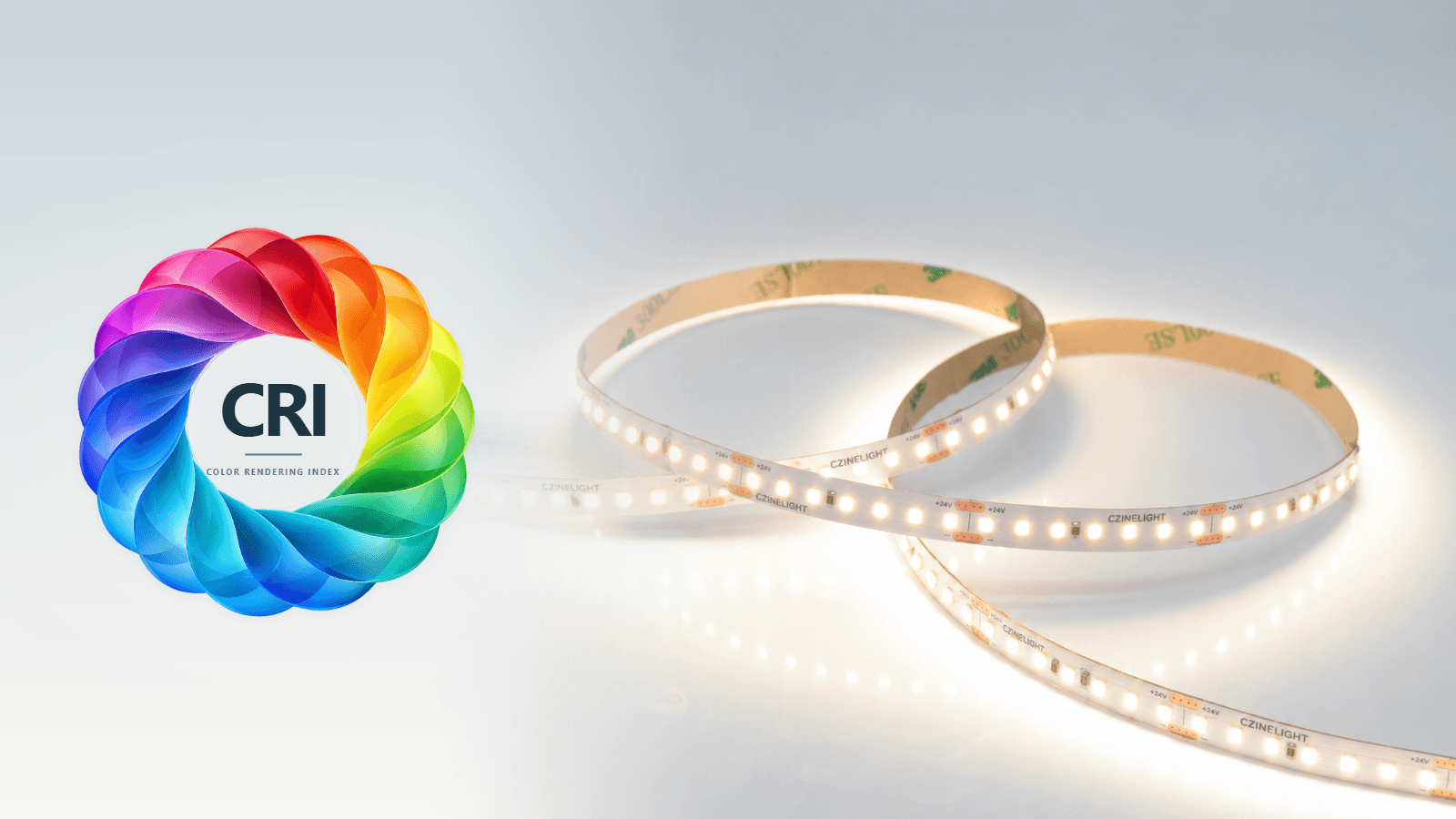
Our CRI selection guide explains how color-rendering requirements vary by application.
5. What Should Buyers Check Before Ordering?
Input Voltage and Frequency
Specify the destination market and confirm the product’s rated input range and frequency.
Use the exact model documentation rather than treating “220V COB” or “AC COB” as a complete electrical specification.
Maximum Run Length
Ask for the maximum permitted continuous run, together with the connection arrangement and operating conditions.
Three different lengths need to be understood.
Roll length is the quantity supplied on a reel.
Maximum run length is the length permitted under the manufacturer’s specified conditions.
Project length is the total lighting required across all sections of the installation.
A project needing a 40-meter architectural line cannot be approved solely because a product comes on a 50-meter roll. Corners, section lengths, connections and maintenance access still need review.
Cutting Interval
Check how the specified cutting interval fits the actual dimensions. A strip described as cuttable may still require the layout to follow defined section lengths.
Confirm whether cutting is allowed on site, who may perform it, and what connection and sealing procedures apply.
Include the dimensions of connectors and end caps when calculating the finished assembly.
Light Output and Color Quality
Compare lumens per meter, watts per meter, color temperature, CRI and color consistency under stated conditions.
“High voltage” does not establish brightness or efficacy. Likewise, a continuous-looking COB surface does not establish high color fidelity.
Choose the measured performance required by the application.
Performance Along the Run
For extended installations, request representative information about brightness and color at different positions along the proposed length.
Ask how the sample was supplied, mounted and operated. A photograph of a short section provides limited evidence for a much longer installation.
Covering, Dimensions and Environmental Suitability
Review width, thickness, covering material, mounting method and permitted bending direction.
Check the protection of the finished connections as well as the strip body.
Where the project involves sunlight, cleaning chemicals, humidity or other demanding exposure, request the relevant suitability information.
Dimming and Flicker Performance
Confirm whether the exact model supports dimming and which equipment is compatible.
For dimmed installations, assess startup, low-level stability, visible stepping and audible noise.
For camera-sensitive spaces, request appropriate flicker data and evaluate the actual setup. The COB construction itself does not determine these results.
Documentation and Accessories
Request the model datasheet, installation instructions, accessory list and relevant compliance documents for the destination market.
Match the documents to the supplied model and configuration.
Keep a record of the approved strip and accessories so replacement orders can be checked against the original selection.
6. Plan Connections, Mounting and Maintenance
Set out the route before ordering. Mark section boundaries, corners, supply connections and locations that need future access.
Use the specified mounting system and observe the product’s thermal and bending requirements. Follow its restrictions on covering, recessing and operation while wound on a reel.
For mains-voltage products, electrical work should be carried out by a qualified person with the supply disconnected, following the applicable installation requirements. Cutting and sealing must follow the instructions for the exact product.
Confirm that the specified accessories match the selected strip, including its dimensions, connection system and environmental requirements.
Keep the approved accessory list with the project documentation so future maintenance uses the correct components.
Before approving a larger order, review a representative sample that includes a connection and finished end. Check its appearance, mechanical fit and service access in the intended mounting arrangement.
Frequently Asked Questions
Can High Voltage COB LED Strips Be Cut?
Some models permit cutting at defined positions. Confirm the interval, allowed handling and required finishing procedure in the model instructions.
Do not assume the strip can be cut at any location or that a cut section retains its original protection without the specified treatment.
Can a High Voltage COB Strip Run for 50 Meters?
Only if the manufacturer permits that length under the proposed operating and connection conditions.
A 50-meter reel describes packaging quantity; it does not independently establish an approved installation length.
Are High Voltage COB LED Strips Dimmable?
Dimming support varies by model. Confirm the control method, compatible equipment and performance at the required brightness levels.
A 24V strip controller should not be assumed compatible with a mains-voltage strip.
Can High Voltage COB Be Used Outdoors?
Choose a product and complete connection system suitable for the intended exposure.
Review environmental ratings, mounting restrictions and sealing requirements. Outdoor suitability must be established for the finished installation.
Is High Voltage COB Brighter Than 24V COB?
Voltage alone does not establish brightness.
Compare the actual luminous output, light distribution and installed result. Also consider efficacy, color quality and thermal conditions when evaluating alternatives.
Choosing High Voltage COB for Your Project
High voltage COB is worth considering when a project calls for extended, continuous-looking lighting lines and the product fits the installation requirements.
Start with the intended effect and route. Then confirm run length, cutting intervals, light quality, environmental suitability and the complete connection system.
For a broader project overview, see our LED strip lighting system selection guide.
Planning a long linear lighting project? Share your installation lengths, destination market, preferred light quality and environmental requirements with CZINELIGHT when requesting a quotation.