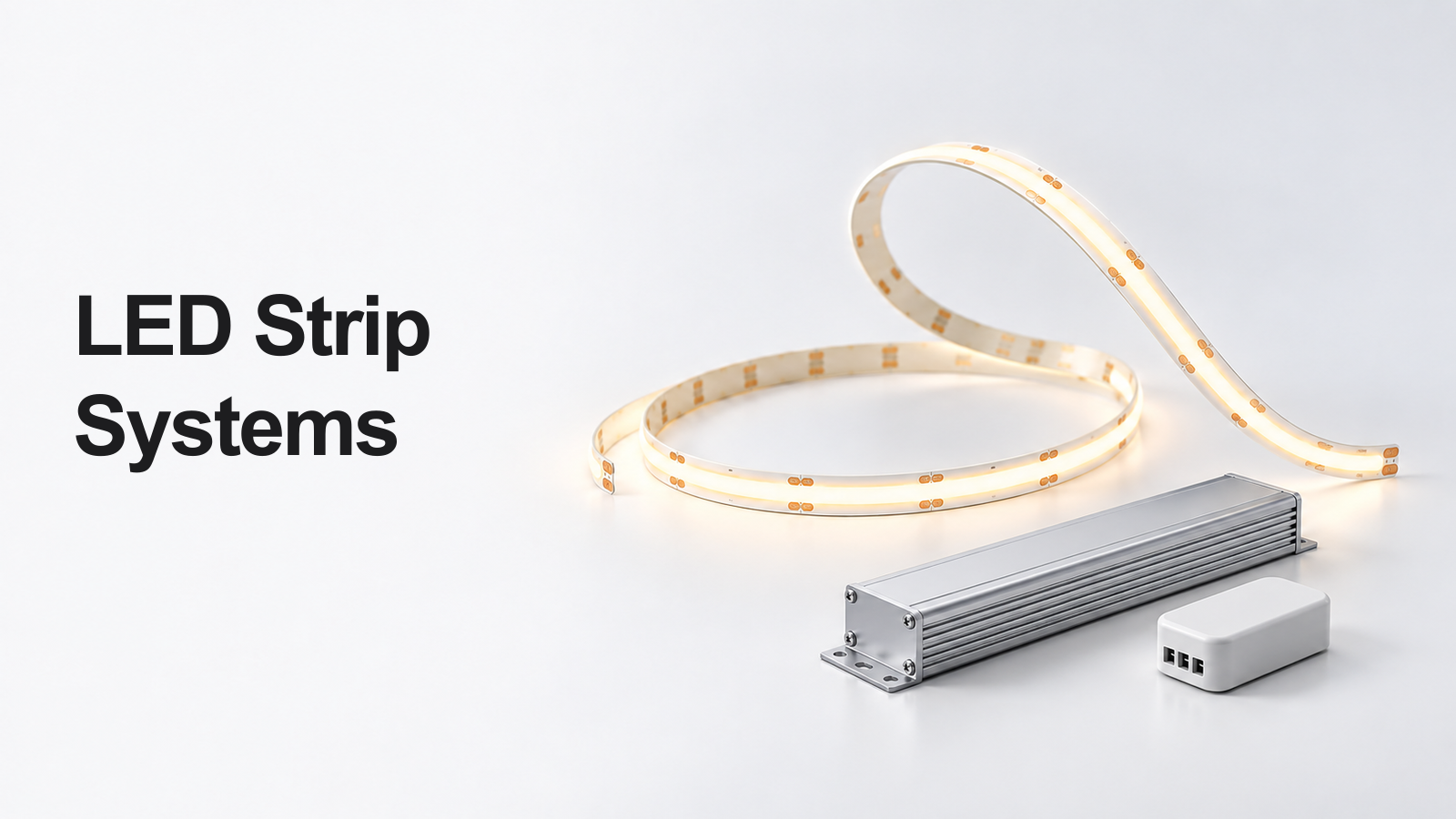
Start with the Lighting Application
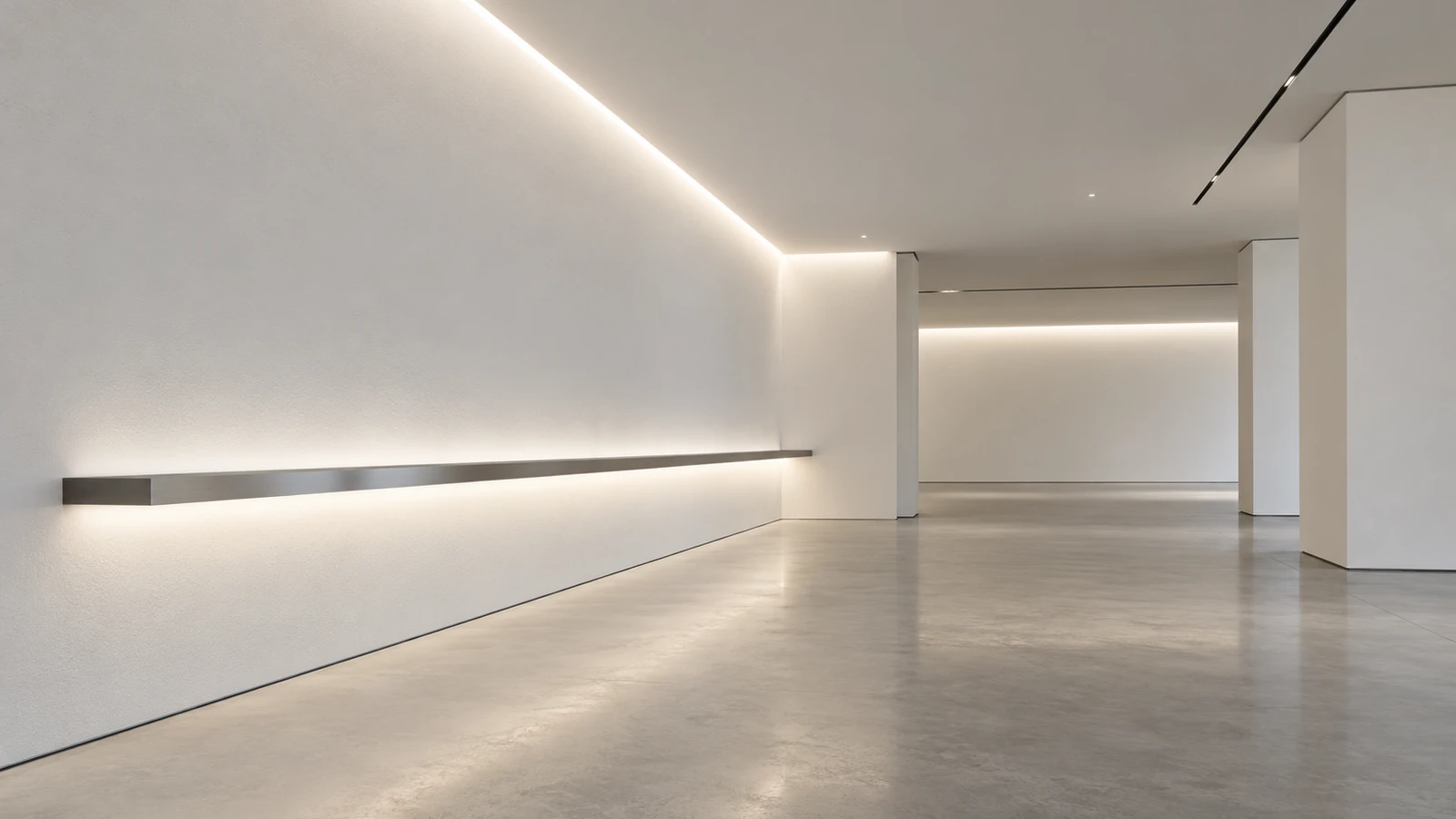
First, decide what the lighting needs to achieve.
For under-cabinet work surfaces, prioritize useful illumination, color quality and glare control. For ceiling coves, consider the distance between the strip and the illuminated surface, the required brightness and access for maintenance.
For decorative outlines, a continuous appearance may matter more than high light output. Entertainment applications may require segmented colors and a compatible effects controller.
Recent product launches illustrate this range of requirements. In September 2026, Philips Hue announced new television synchronization options, cuttable gradient TV strips and a flexible rope light designed for continuous illumination around its circumference. These are examples of how installation format and control experience shape product selection.
Before comparing products, write down the application, installation dimensions and expected lighting effect.
Separate Light Source Technology from Control Features
LED strip specifications often combine terms that describe different parts of the system.
| Term | What it describes | What to verify |
|---|---|---|
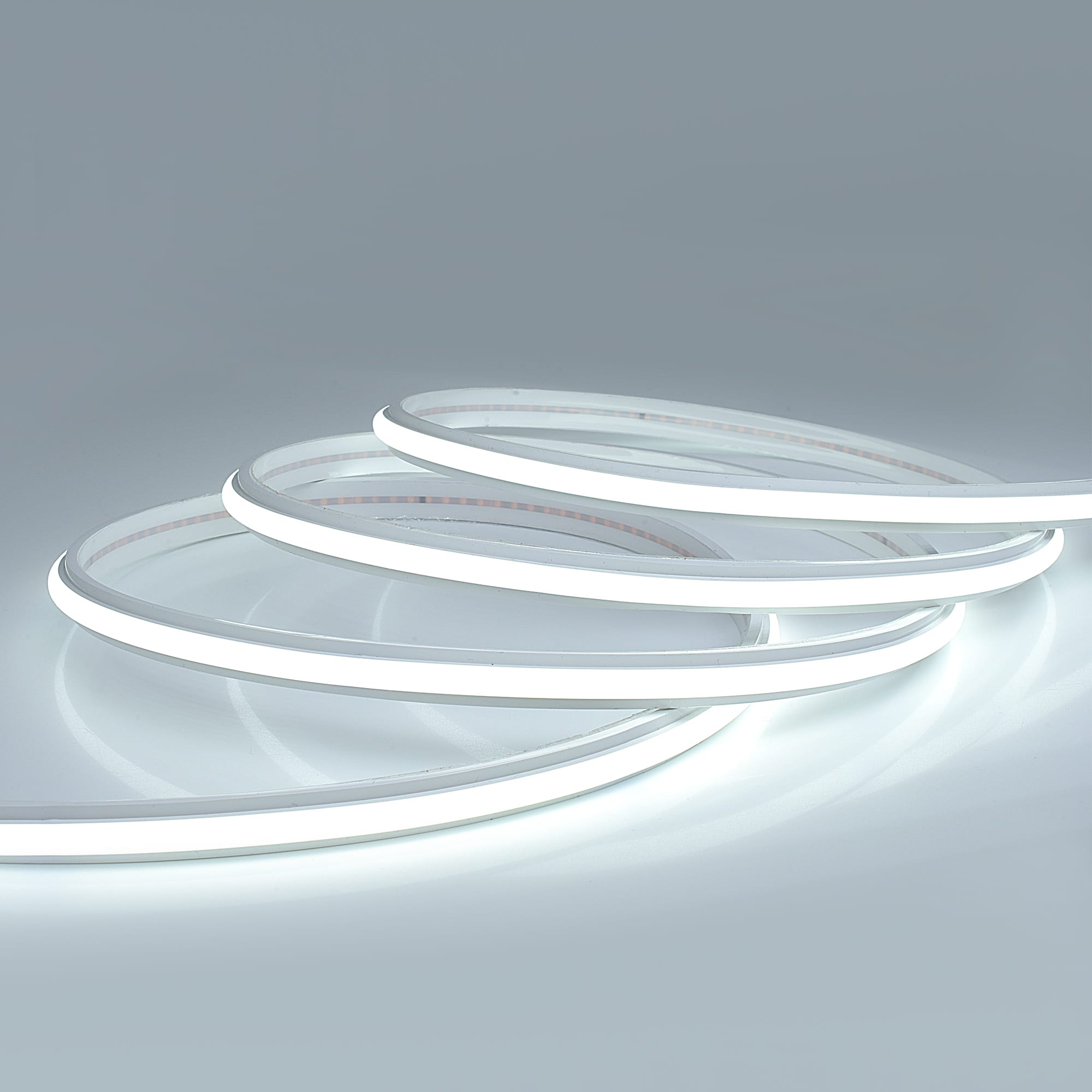
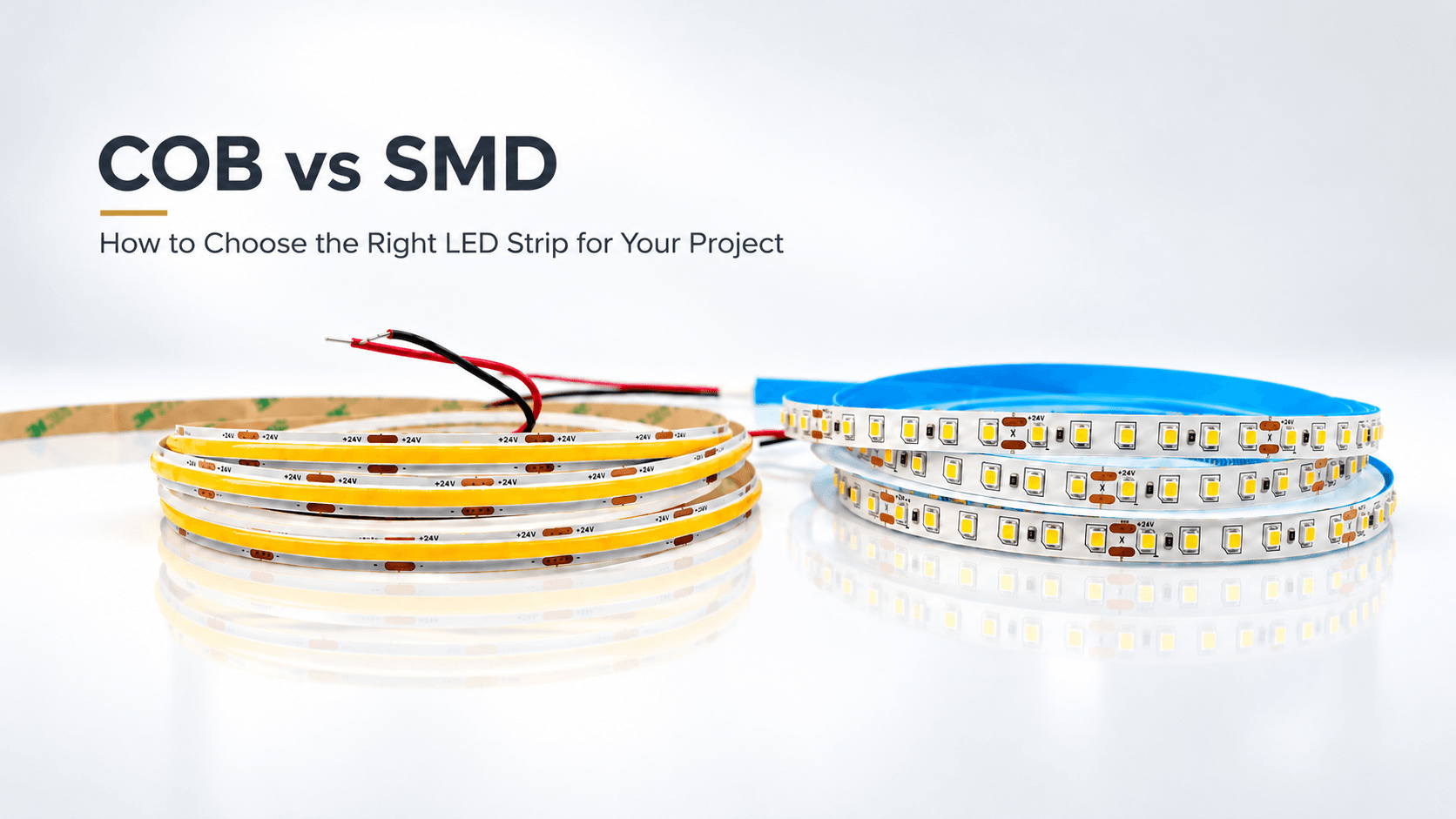
| COB | A light source construction commonly used to produce a continuous-looking line | Uniformity in the intended profile, output, cutting interval and thermal requirements |
| SMD | A construction using surface-mounted LED packages | LED spacing, optical performance and diffuser requirements |
| RGB / RGBW / RGB+CCT | Color-channel configuration | Required white-light function and compatible controller outputs |
| RGBIC / addressable | Segmented or pixel-based color control, depending on the product | IC protocol, control resolution and supported effects |
| Matter | Smart-home interoperability | Exact device support, network requirements and available functions |
These features can overlap. A COB strip can also support addressable color effects. A conventional constant-voltage strip can be connected to a suitable smart controller.
LEDVANCE’s current range includes COB lighting and products combining COB with segmented color effects, illustrating why these terms should be evaluated separately.
Specify Light Quality and Installed Brightness
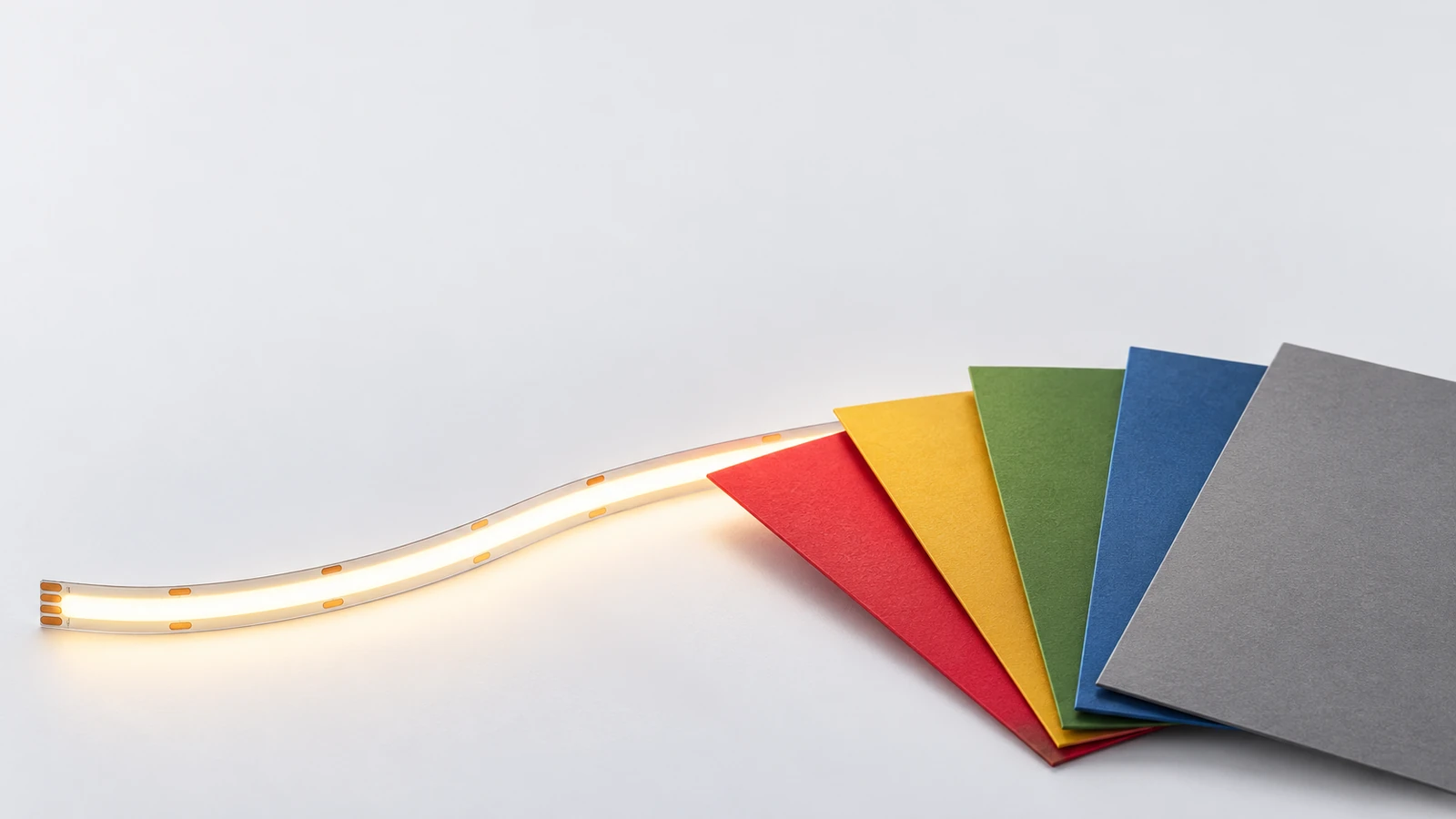
Watts per meter describe electrical power consumption. They do not directly tell you how bright the completed installation will appear.
When comparing strips, request:
- Luminous output per meter, with the operating conditions stated;
- Power consumption per meter;
- Color temperature and available tolerances;
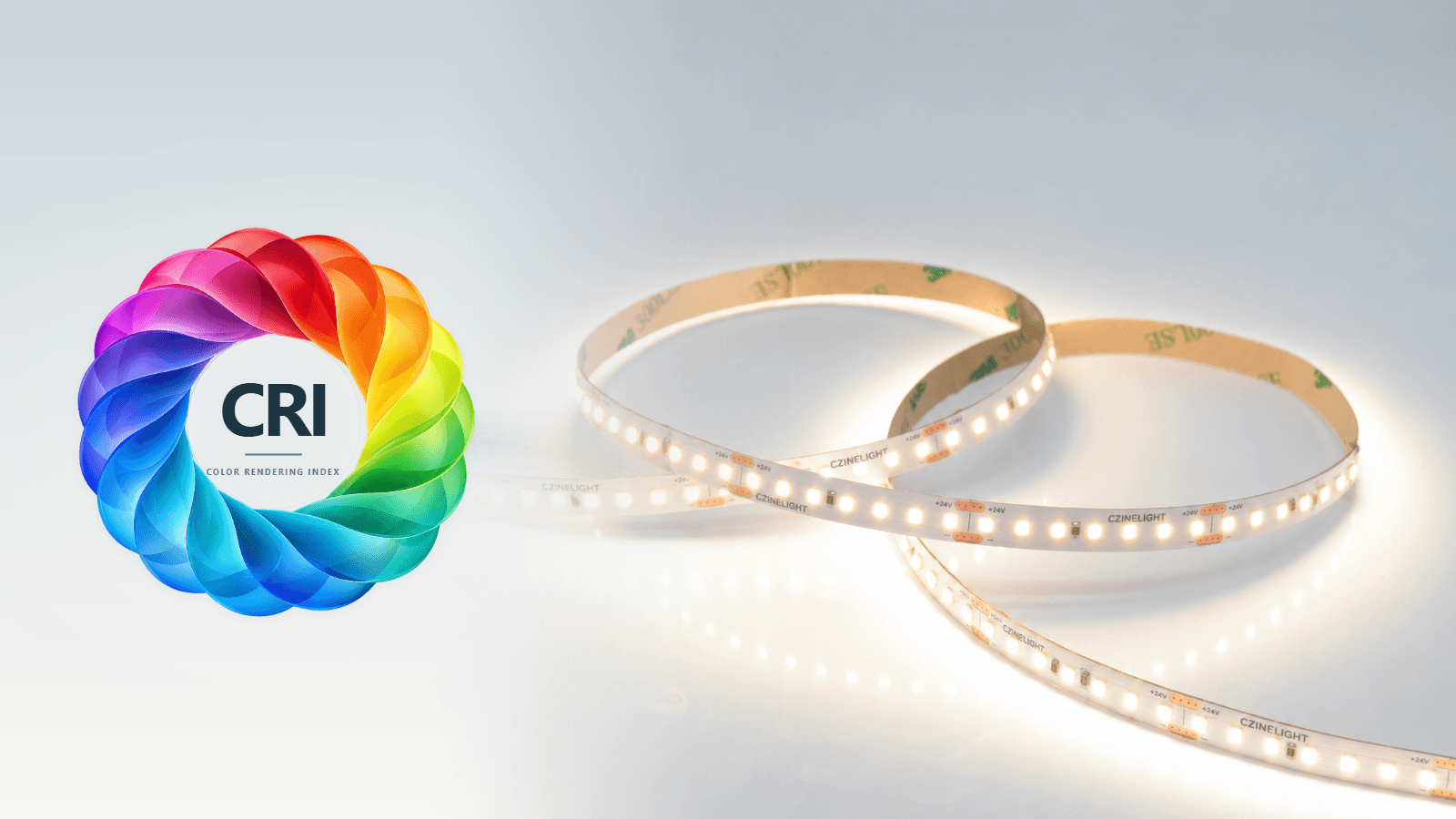
- CRI, with additional color-rendering information when the application requires it;
- Color consistency information, such as SDCM where available;
- Photometric information relevant to the proposed installation.
Also consider the finished assembly. A diffuser changes light transmission, while profile geometry and mounting position affect distribution and glare.
COB can help achieve a continuous-looking line, but that appearance does not establish its efficiency, color accuracy or installed illuminance. Those properties need their own specifications.
For projects covering several rooms or repeated installations, ask how color consistency will be managed across production batches and replacement orders.
Match the Strip, Power Supply and Controller
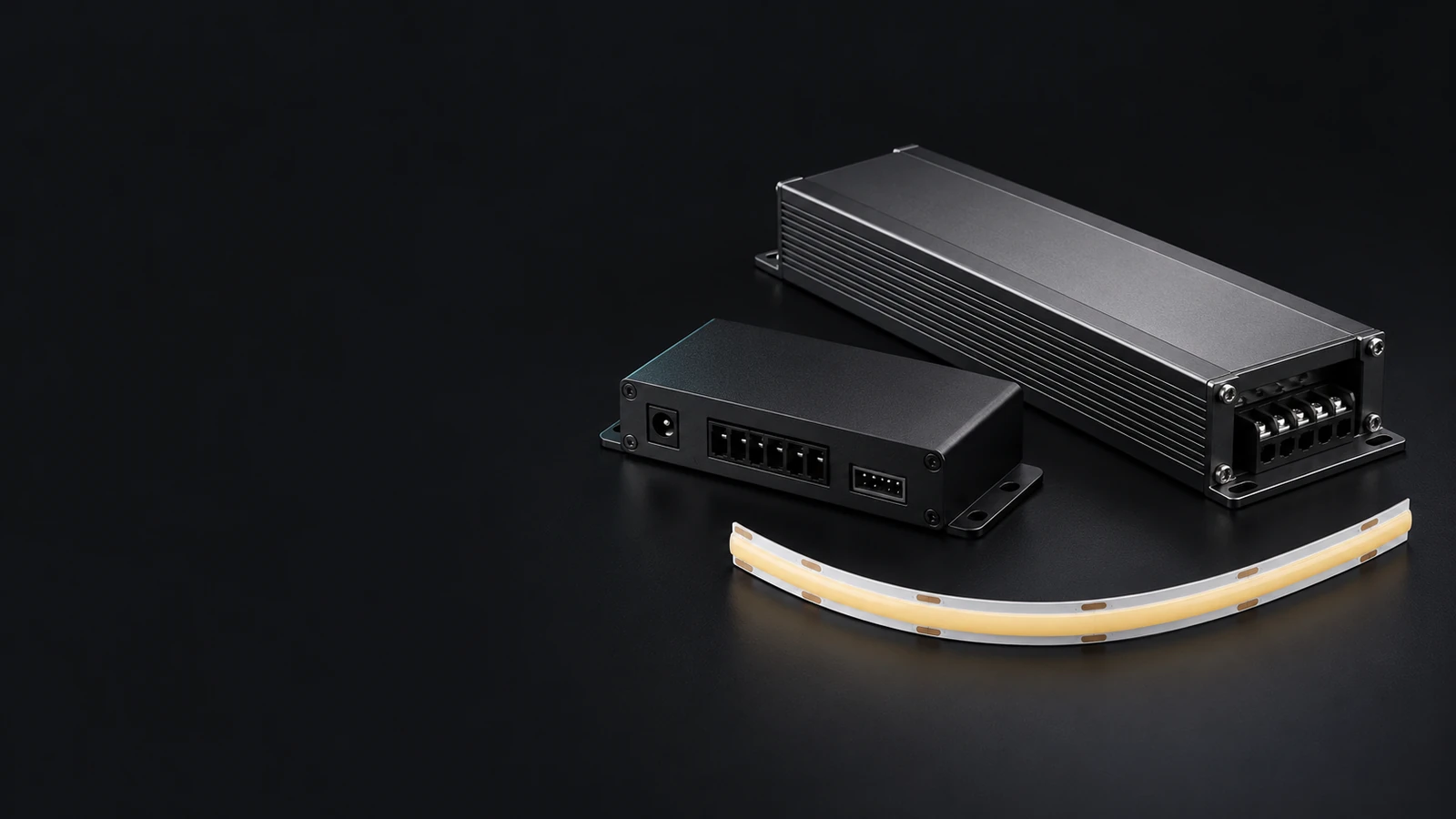
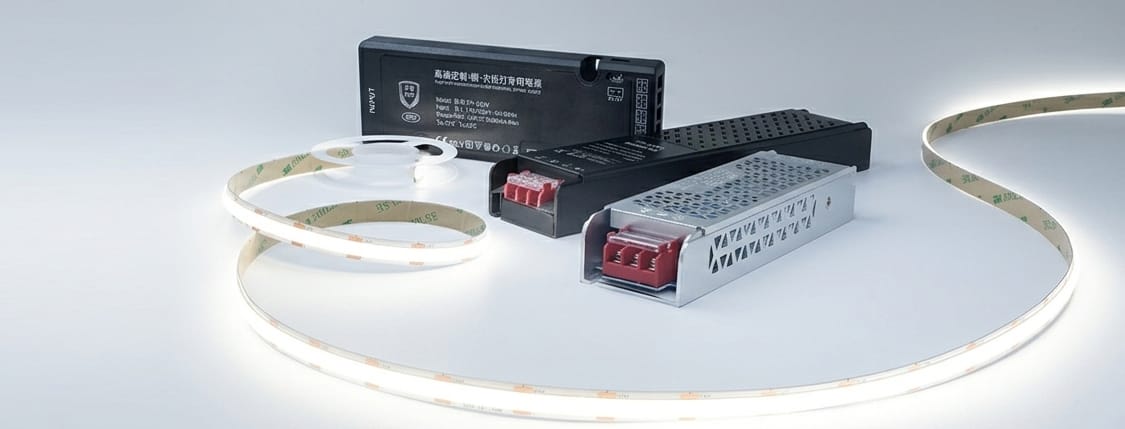
For a constant-voltage system, begin by checking that the strip, power supply and controller use compatible voltage ratings.
Next, check the output configuration. A tunable-white strip and an RGB+CCT strip require different channel arrangements. Addressable strips also need a controller that supports their specific control protocol.
Controller capacity requires more than a total wattage comparison. Check the permitted current per channel, total current, connection limits and any manufacturer-specified operating restrictions.
For smart control, distinguish the communications method from the lighting output. . The correct selection depends on the intended smart-home setup as well as the connected strip.
Do not assume that basic smart-home compatibility provides every proprietary lighting effect. Confirm the exact functions required, including dimming, color adjustment, scenes, segmentation and synchronization.
Plan the Installation Before Ordering
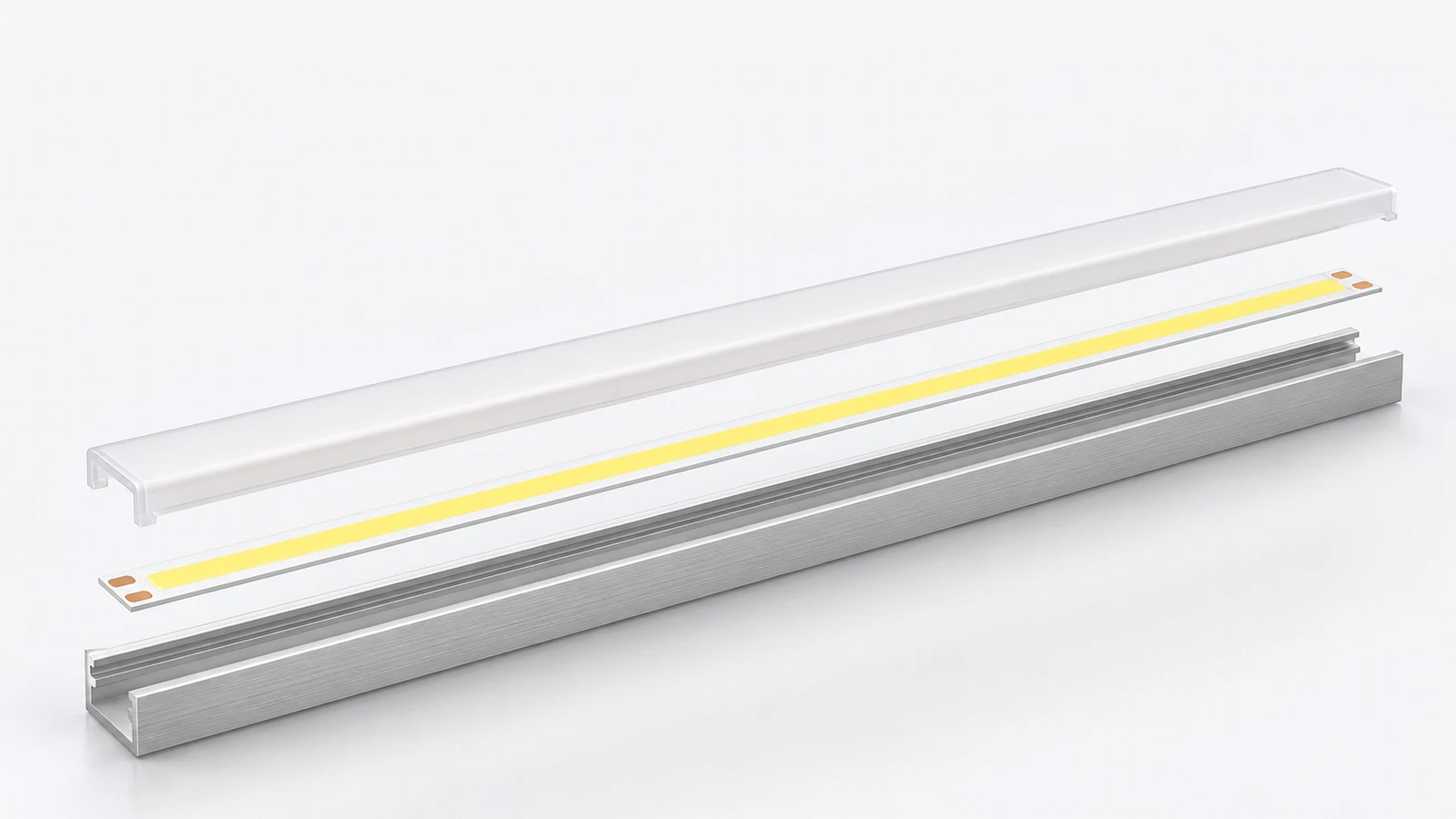
A reliable installation starts with a layout drawing.
Mark the strip sections, cable routes, power-feed points, controller locations and accessible power-supply positions. Record the distance between the power supply and each lighting section.
For longer runs, use the supplier’s recommended maximum lengths and feed arrangements. Increasing power-supply capacity alone does not resolve voltage drop along a strip or its cables.
Check the following mechanical details:
- PCB width and fit inside the selected profile;
- Cutting intervals and achievable finished lengths;
- Connector dimensions and space at corners;
- Minimum bending radius and permitted bending direction;
- Mounting surface and heat-dissipation requirements;
- Access for replacing strips, connectors and drivers.
For outdoor or damp locations, evaluate the complete assembly. Strip coating alone does not establish the protection of cut ends, connectors, cable entries, controllers or power supplies.
Test a representative installed sample before approving a larger order.
Use an Application-Based Selection Checklist
| Application | Main priorities | Sample checks |
|---|---|---|
| Kitchen worktop | Useful white light, color rendering, glare control | Shadows, visible reflections and illumination on the work surface |
| Hotel cove | Color consistency, dimming and service access | Low-level dimming, uniformity and corner details |
| Retail display | Merchandise appearance and consistent light | Actual product colors under the proposed lighting |
| Decorative outline | Continuous appearance and mechanical fit | Visible dots, bends and connection points |
| Entertainment lighting | Color segmentation and system compatibility | Effects, response and supported synchronization features |
| Outdoor architectural detail | Environmental suitability and maintainability | Sealing, connections, mounting and exposure conditions |
The best choice is the system that meets the application requirements with acceptable installation and maintenance costs.
What to Include in Your Supplier Inquiry
A clear inquiry helps the supplier recommend a compatible configuration.
Include the application, installation drawing, total quantity and individual run lengths. State the required voltage, color temperature or color functions, target light output, color-rendering requirements and intended control system.
Also identify the installation environment, profile dimensions, cable distances and destination market.
For OEM or private-label orders, add packaging requirements, labeling, documentation and the compliance evidence needed for the destination market.
Where a parameter has not yet been decided, explain the required result. A supplier can assess a defined lighting task more effectively than a request for the “brightest” or “best” strip.
Frequently Asked Questions
Is COB always better than SMD?
The choice depends on the application and the specific products. Compare uniformity, output, efficacy, color quality, installation requirements and cost. A technology name alone does not establish overall performance.
Does RGBIC guarantee good white light?
No. Segmented color control and white-light quality are separate properties. If white lighting is important, verify the white-channel design and relevant photometric specifications.
Can any LED strip work with a Matter controller?
Compatibility depends on the controller’s voltage, output arrangement, current capacity and supported strip type. Check the exact pairing before ordering.
Can a larger power supply solve brightness loss on a long run?
Not by itself. Cable and strip resistance, run length and power-feed arrangements must also be evaluated.
Should I test only a short strip sample?
A short sample is useful for an initial assessment. Project approval should also include a representative setup using the intended profile, diffuser, controller and feed arrangement.
Define the System Before You Order
A well-specified LED strip project connects the desired lighting effect with compatible electrical components and a practical installation plan.
Share your application, installation lengths, required light quality and control preferences with CZINELIGHT when requesting a quotation. Include a layout drawing where available so that the proposed configuration can be reviewed against the project requirements.